Larnaca, Cyprus

August 26th, 2026

Larnaca, Cyprus. 2013

There were no hotels in Larnaca in April 2013, and the only room, very small but charming, overlooked the sea. It was a hot and humid day, and as night fell, as if by magic, an unforgettable lightning display unfolded. Since I didn’t have a tripod, I propped my camera on the balcony railing and took a few photos, some of which turned out well.

Burning land

August 13th, 2026

Image of a signal burned by a fire in Pontevedra province. 1984.

The fire is a business and a crime

1985-2026 © Delmi Alvarez

Spring 2026
Long-term documentary in progress

Prevarication, oligopoly, bribes, trials without culprits, rural depopulation, exhausted and poorly paid pilots, firefighters without contracts, outdated forestry plans, eucalyptus proliferation, pulp mills. Many people involved in the issue of wildfires remain silent and complicit. Millions of euros, families, jobs, futures, mortgages, and a long list of other things are at stake—things that shouldn’t be spoken of and that they prefer to keep quiet. They must remain silent, keep quiet, while the fire business has claimed lives, and others gamble with their own.

Caption: Cockpit view flying with the 43rd Wing of the Spanish Air Force. Flight in the seaplane with registration 431-01, a Canadair CL-215-1A10 (commonly known as the CL-215), from its base in Santiago de Compostela in the summer of 1984, fighting wildfires. It is currently in the Spanish Air Museum. Crew: Prominent Officers at Santiago Air Base (1980s) Although personnel changed every few weeks during the 1984 campaign, the pilots and officers who led the Canadair CL-215 detachments at Santiago de Compostela Airport during that period and the early 1990s included: Captain Pedro Álvarez de Sotomayor Seoane, Captain Jesús Cembrano Díaz, and Lieutenant Carlos Remírez de Esparza. This is the first version of this legendary family of amphibious aircraft, characterized by its use of piston engines (radial engines) instead of the turboprop engines found in more modern models like the CL-415. Credit Photo 1984 © Delmi Alvarez

The pilots of the Air Force’s Canadair CL-215 seaplane (“43 Group”) from the firefighting group based in Lavacolla started, one by one, the two Pratt & Whitney R-2800-83AM 18-cylinder radial piston engines, with a power of 2100 hp each, to load 5000 liters of water.
I fastened my seatbelt in the carrier behind the captain and adjusted my headphones, and they did the pre-flight check.
“Can you hear me?” the captain asked.
—Loud and clear, captain.
The sound of the two turboprops was music to our ears; all parameters, gauges, and navigation systems were working, as well as oil and fuel pressures.
The captain gave a thumbs-up to the ground attendant outside and requested permission from the tower to taxi and line up. Fires in the 70s and 80s weren’t as aggressive as they are now, but to be an air raider (slang for Canadair crews), you need very thorough and extensive training.
—Are there dangers?
—Many.

Follow the story of fires in the Northwest coast.

https://www.delmialvarez.com/burned-land-3

Storm Kristin

March 11th, 2026
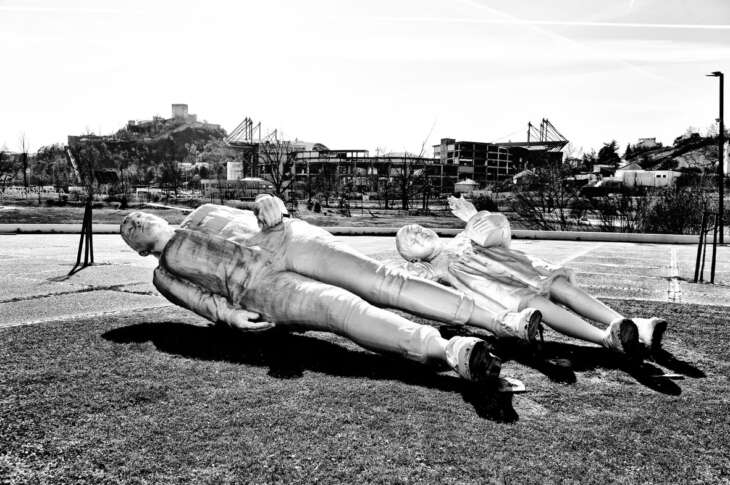
Afertmath of storm Kristin. 21.02.2026. Leiría, Portugal

#storms#kristin#portugal#leiria